

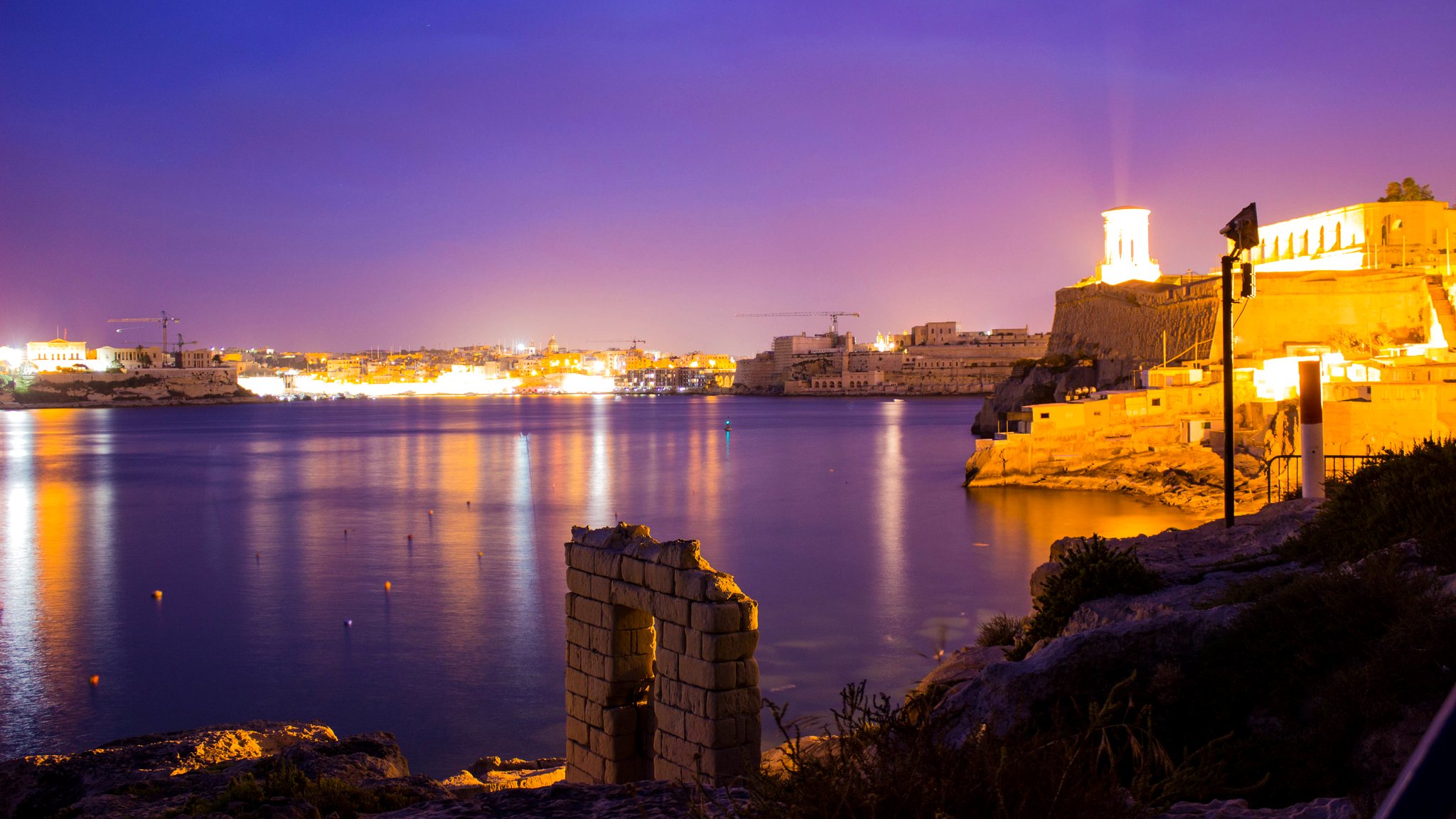
🇲🇹Malta
A European degree in English, 300 days of sunshine and a tech sector that hires international graduates.
One of only three fully English-speaking countries in the European Union, some of the lowest tuition fees in Western Europe and a tech job market that hires international graduates: Malta is small, but it thinks big.
Why Malta?
- A European degree in EnglishThe University of Malta (founded in 1769) teaches, examines and awards degrees in English: an EU degree without learning a new language.
- Affordable tuition€6,500 to €10,000/year at bachelor’s level for non-EU students: the most affordable English-speaking entry point in Western Europe.
- A market that hiresMore than 300 iGaming companies, plus fintech and financial services, operate in English and sponsor work permits.
- The Mediterranean, every day300 days of sunshine, the sea 20 minutes from anywhere and the Schengen Area for travel.
Admission requirements
- Certified baccalaureate (bachelor’s) or a bachelor’s degree with transcripts (master’s)
- Degree recognition through MQRIC
- Proof of English: IELTS 6.0 to 6.5 depending on the programme
- Motivation letter and two references for selective programmes
- Proof of funds of around €7,000/year
- Apostilled police record and comprehensive health insurance
The D visa is applied for at the embassy before departure (€60 to €116 depending on nationality), then the e-Residence permit is handled locally with Identità Malta. Proof of accommodation is part of the application: we prepare it with you.
Your monthly budget at a glance
| Expense | Range |
|---|---|
| Room in a residence | €350 – 550 |
| Shared flat | €400 – 650 |
| Food | €200 – 280 |
| Transport (student bus pass) | €25 – 40 |
| Phone, internet & extras | €40 – 60 |
| Going out & leisure | €80 – 160 |
| Estimated total | €700 – 1,200 /month |
Sliema and St Julian’s are the most expensive areas; Msida, around the campus, and the south of the island remain affordable.
Frequently asked questions
Can I work during my studies?
Yes: up to 20 hrs/week with an employment licence applied for together with your employer. You must keep up 15 hours of classes per week and 75% attendance.
Can I stay in Malta after graduation?
Yes: a 12-month permit to look for a job, with full work rights. After that, your employer applies for the Single Permit, with a fast track (5 days) for in-demand occupations.
Is English really enough?
Yes: English is an official language, the language of instruction and of the workplace. You will hear Maltese in the street, but everything runs in English.
Which scholarships can I aim for?
The Maltese government’s Endeavour programme, Erasmus+ support and partial scholarships from the University of Malta for strong non-EU applicants.
Which sectors hire the most?
iGaming, fintech, IT, finance and business law: sectors concentrated on a small island where your professional network builds fast.
Figures and rules verified at the time of publication: fees, scholarships and visa conditions change regularly. Every detail is confirmed with you, up to date, during the consultation.
Let’s talk about your Malta project.
Thirty minutes with a dedicated advisor: your profile, your budget and a clear action plan. No obligation.
Your future starts with a conversation.
Book your free consultation: a dedicated advisor listens to your project and offers you a clear plan, with no obligation.