

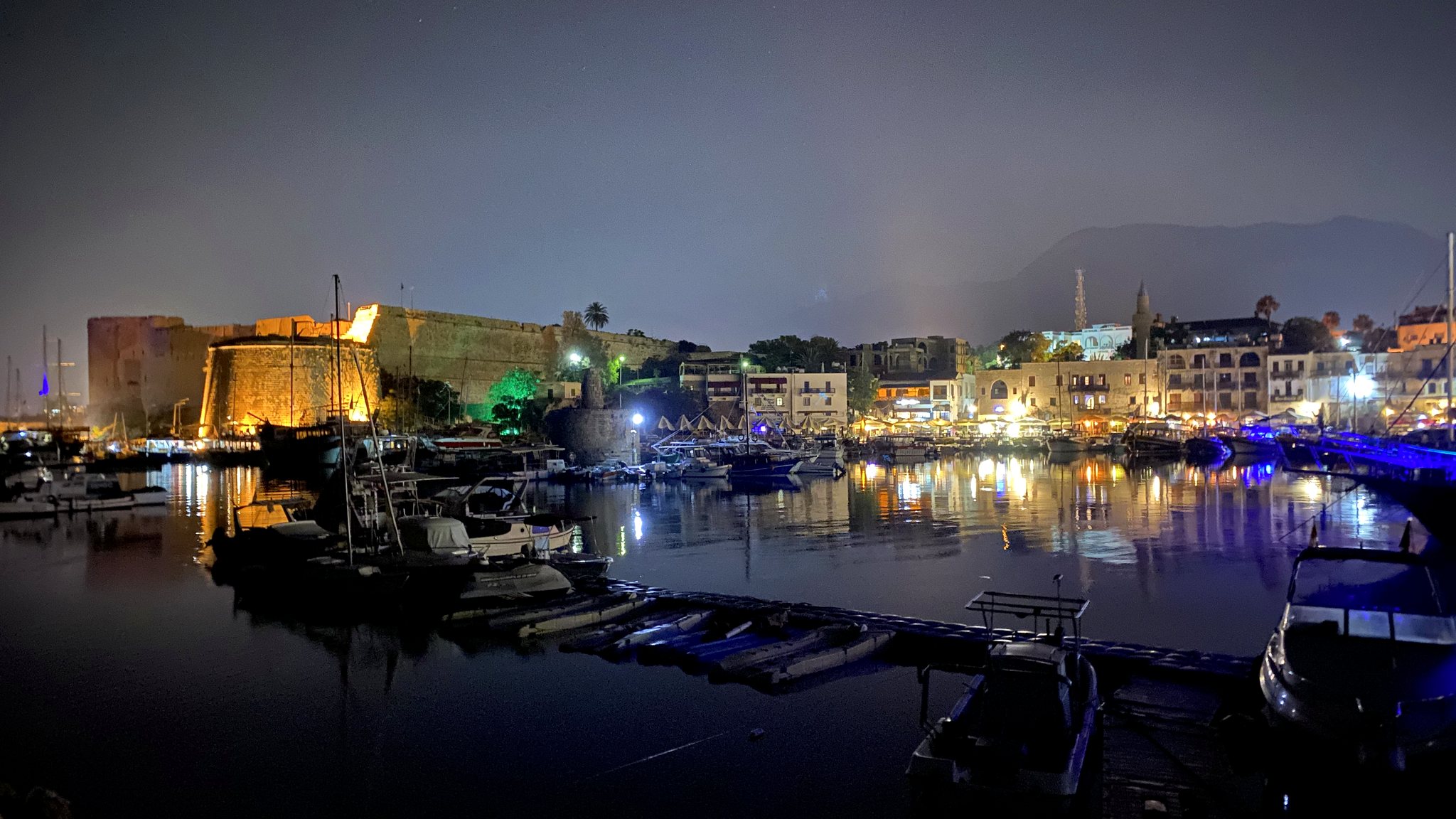
🇨🇾Cyprus
A European degree in English from €4,000 per year, including some of the most affordable medical schools in the EU.
A European degree taught in English from €4,000 per year, some of the most affordable medical programmes in the Union and Schengen entry in 2026: Cyprus is the most accessible English-language route into the EU.
Why Cyprus?
- The EU’s entry price€4,000 to €10,000/year at private English-speaking universities, around €3,400/year at the public university: a degree recognised in all 27 countries of the Union.
- Medicine within reach€7,400 to €8,000/year for accredited medical programmes (recognised by the WHO and the EU), versus €45,000 and up in Western Europe.
- Fast admissionsSimple applications, IELTS 5.5 to 6.5 and decisions often issued within 2 to 4 weeks.
- Schengen in 2026Cyprus joining the Schengen Area will open free movement across 27 European countries, at Cypriot prices.
Admission requirements
- Certified and translated baccalaureate (bachelor’s) or a bachelor’s degree with transcripts (master’s)
- Proof of English: IELTS 5.5 to 6.0 for bachelor’s, 6.0 to 6.5 for master’s
- Motivation letter for competitive programmes
- Apostilled police record and medical certificates
- Proof of funds: €8,000 to €10,000/year
The long-stay visa (category D) is applied for at the embassy with your admission letter (€60 to €140, 4 to 8 weeks), then the temporary residence permit is filed within 10 days of arrival, usually through the university’s international office. The acceptance rate is close to 100% for complete applications.
Your monthly budget at a glance
| Expense (Nicosia) | Range |
|---|---|
| University residence | €250 – 450 |
| Room in a shared flat | €300 – 500 |
| Food | €180 – 260 |
| Transport | €20 – 40 |
| Phone, internet & extras | €35 – 60 |
| Going out & leisure | €70 – 140 |
| Estimated total | €700 – 1,200 /month |
Limassol, driven by tech and finance, has become noticeably more expensive: Nicosia and Larnaca remain the best student bases.
Frequently asked questions
Can I work during my studies?
Yes, with limits: 20 hrs/week in a list of labour-shortage sectors, after the first six months, and 38 hrs/week during holidays.
Is the degree recognised in Europe?
Yes: accredited Cypriot universities are part of the Bologna Process. In fact, many graduates go straight on to a master’s in Germany, the Netherlands or France.
What about medicine?
The English-language medical schools in Nicosia are accredited and recognised (WHO, EU, UK GMC), with clinical rotations in Cyprus and Greece, for €7,400 to €8,000/year.
Will Cyprus be in Schengen?
Accession is on track for 2026: students living in Cyprus will gain free movement across the Schengen Area, just as from France or Germany.
Can I stay after graduation?
A 6-month extension lets you look for a job locally; many graduates instead use their European degree to target the job market across the whole EU.
Figures and rules verified at the time of publication: fees, scholarships and visa conditions change regularly. Every detail is confirmed with you, up to date, during the consultation.
Let’s talk about your Cyprus project.
Thirty minutes with a dedicated advisor: your profile, your budget and a clear action plan. No obligation.


Your future starts with a conversation.
Book your free consultation: a dedicated advisor listens to your project and offers you a clear plan, with no obligation.